
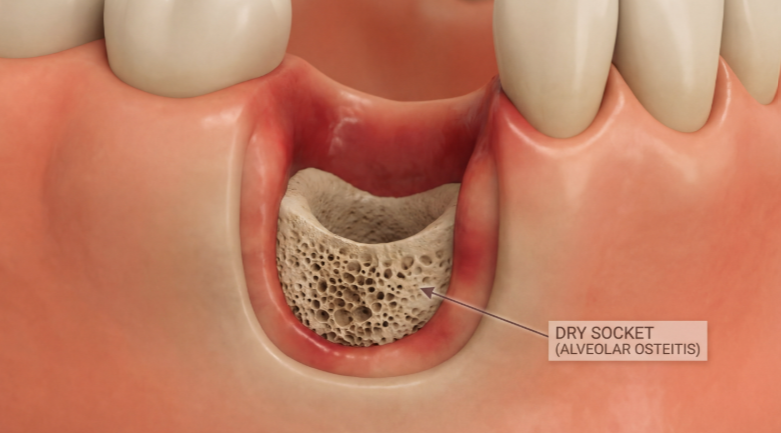
What Is Dry Socket?
Dry socket is a painful dental problem. It can happen after a tooth extraction. Normally, a blood clot forms in the empty space where the tooth was. This clot protects the bone and nerves as your mouth heals. However, sometimes this clot gets lost or does not form. When this happens, the bone and nerves are exposed. As a result, you may feel strong pain. Dentists call this condition “dry socket.” It is one of the most common issues after tooth removal.
Why Does Dry Socket Happen After Tooth Extraction?
After a tooth is pulled, your body tries to heal the area. Usually, a blood clot forms in the socket. This clot acts like a natural bandage. However, if the clot breaks loose or dissolves too soon, the area is left unprotected. Because of this, air, food, and fluids can touch the bone and nerves. This leads to pain and slows healing. Smoking, poor oral care, or touching the area can increase your risk. According to dental experts, dry socket is more likely after removing wisdom teeth.
Symptoms of Dry Socket
Dry socket symptoms usually start a few days after extraction. At first, you may feel mild pain. But soon, the pain can get worse. It may spread to your ear, eye, or neck. You might also notice:
If you notice these signs, contact your dentist right away. Early care can help you heal faster.
Risk Factors and Causes
Several things can raise your risk of dry socket. For example, you may be more likely to get it if you:
In addition, certain health conditions or medicines can slow healing. Always tell your dentist about your health history before an extraction.
How Is Dry Socket Diagnosed?
Your dentist will check your mouth and ask about your symptoms. Often, they can see the empty socket and exposed bone. Sometimes, they may take an X-ray. This helps rule out other problems, such as infection or leftover tooth pieces. Because dry socket is easy to spot, diagnosis is usually quick. Early diagnosis leads to better care and less pain.
Effective Treatments for Dry Socket
If you have dry socket, your dentist can help. First, they may clean the area to remove debris. Next, they may place a medicated dressing in the socket. This helps reduce pain and protect the bone. You may need to return for dressing changes. In addition, your dentist may suggest:
Most people feel better within a few days. However, follow your dentist’s advice for the best results.
Prevention Tips: How to Avoid Dry Socket After Extraction
There are simple steps you can take to lower your risk of dry socket. For example, after a tooth extraction:
Because prevention is easier than treatment, always ask your dentist for advice before and after extraction.
When to See a Dentist
If you notice strong pain, bad breath, or see bone in the socket, contact your dentist. Early treatment can prevent further problems. In addition, seek help if you have swelling, fever, or trouble opening your mouth. These may be signs of infection. Remember, your dentist is your best resource for dental care after extraction.
In summary, dry socket is a common but preventable problem after tooth extraction. If you suspect dry socket or need advice, consult dentist at Vivek Dental Clinic promptly for the right care.